

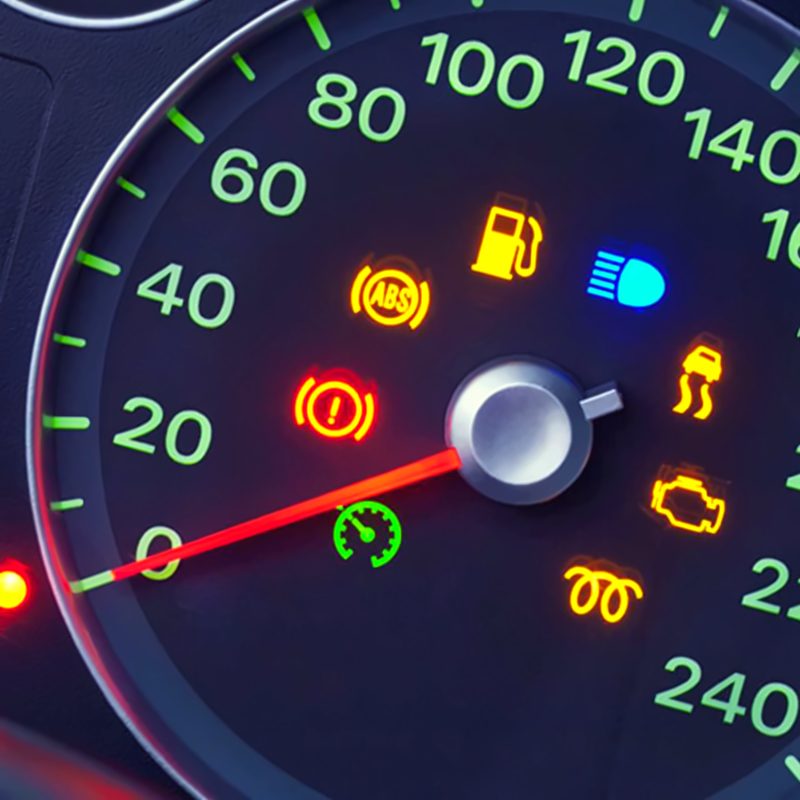
Dashboard warning lights tell you about issues or statuses that need your attention. Here are the most common ones and what they mean.
Red lights: immediate attention
- Engine temperature: the engine is overheating.
- Oil pressure: low oil pressure, which can damage the engine.
- Battery: a problem with the charging system.
- Brake: low brake fluid, a brake system problem, or the parking brake is on.
- Airbag: a potential fault in the airbag system.
Yellow / orange lights: caution
- Check engine: the engine control unit has detected an issue, from minor to serious.
- ABS: a problem with the anti-lock braking system.
- Traction control: the system is active, or has a fault.
- Engine management: related to the emissions system.
- Tyre pressure (TPMS): low pressure in one or more tyres.
Green / blue / white lights: information
- Indicators: flash when your indicators are on.
- Headlights: show your headlights are on, often with a separate high-beam light.
- Cruise control: cruise control is active.
- Fog lights: front or rear fog lights are on.
Common symbols
- Check engine light (MIL): an engine outline.
- Battery light: a battery symbol.
- Oil light: an old-fashioned oil can.
- Temperature light: a thermometer with waves.
- Exclamation mark in a circle: usually brake-related.
- Tyre with exclamation mark: the TPMS warning.
What to do
- Red: stop as soon as it’s safe and deal with the issue.
- Yellow / orange: get the vehicle checked soon. It’s usually safe to drive a short distance.
- Green / blue: information only.
Meanings vary slightly between manufacturers, so check your owner’s manual. If a warning light stays on, book a diagnostic scan and we’ll read the codes and explain what’s wrong.